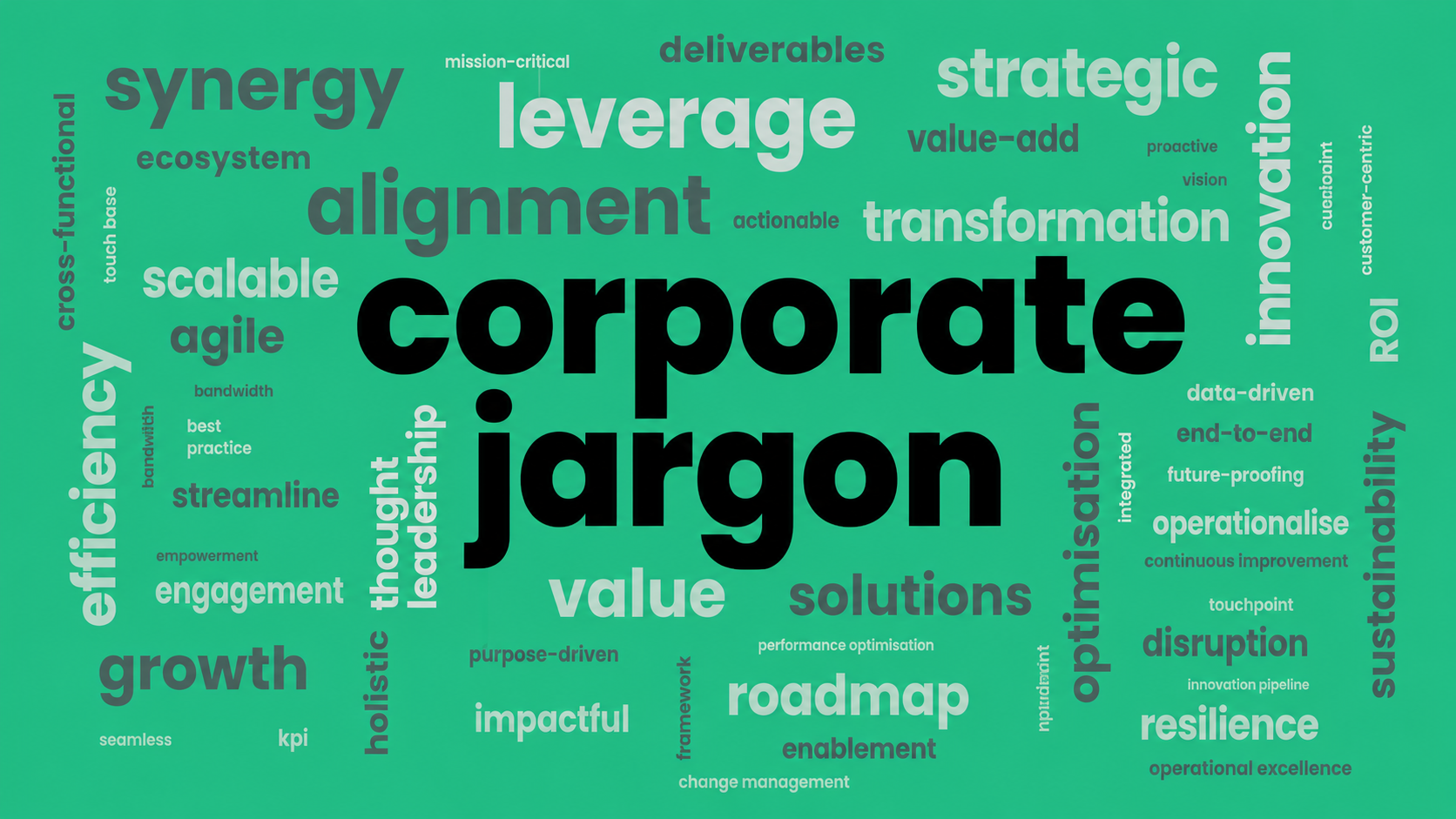
Leveraging dynamic messaging can be a game changer when reaching out or circling back for a quick win.
And if that sentence looked fine to you, then you may well be overusing corporate buzzwords – and losing the opportunity to really connect with your target audience in the process.
Here are just three top reasons why you should ‘lean in’ to more authentic messaging, and replace jargon with meaningful wording to ‘move the needle’ on how your comms lands:
- A clearer message
Unless it belongs to a specific industry-focused subset (which then makes it overly complex for anyone outside of that circle), jargon is often so vague it doesn’t mean anything to anyone. When companies talk about being ‘purpose-led’ or ‘human-centric’, it could mean absolutely anything; by contrast, those businesses which actually are should be able to talk about what that purpose is, or exactly how they focus on people rather than profit.
Explaining the specifics of how you’re making a positive difference has much more of an impact on your audience, compared to simply saying you’re ‘purpose-led’ which is the corporate version of describing a person as ‘nice’. It’s bland, it tells the reader nothing, and doesn’t leave a lasting impression.
An example of a brand which avoids vague buzzwords and clearly explains its purpose is Who Gives A Crap: their communication focuses on their eco-mission, with the specific promise that 50% of their profits are donated towards improving access to toilets and clean water.
- Human-sounding comms
It seems everyone has become an AI detective these days, seeking content they can call out as being written by a machine rather than a real person. One of the sure-fire ways to make your content sound robotic, and thus risk being outed as AI-written (even if it’s not!) is to include a generous smattering of jargon.
You might think it doesn’t matter, but in reality, the perception of who or what wrote your brand’s communications can fundamentally alter customer perceptions, with WordPress VIP reporting 86% of people they surveyed distrusted AI-generated content. Researchers in India also found that, while AI content was seen as efficient and informative, it scored lower than human-created content on authenticity, trust and emotional connection – all major factors influencing purchasing decisions.
- Make your message stand out
Absolutely anyone can ask generative AI to create a piece of content for them, and if companies in the same marketplace are all doing the same then the end results will look very similar. Even if the content is being created by a person, relying on the same corporate buzzwords that everyone else is using means the messaging ends up full of the same tired old tropes that audiences have read (or scrolled past) hundreds of times.
Saying something a little bit differently, having a unique brand voice, and using clear and specific language all make content stand out from the crowd, whether it’s an article, a social media post or a blog.
The likes of Innocent, Oatly, Aldi and Duolingo haven’t risen to the top of the brand comms world by overcomplicating what they do, how they do it, or what they stand for. Their simple but effective messaging resonates because it’s written with its audience in mind; it doesn’t sound like boardroom speak, but rather the sort of conversation you might have with a friend. By using humour, humanising their messaging, and avoiding unnecessarily complex or corporate wording, they highlight exactly why jargon isn’t needed.
To enhance your messaging, start thinking outside the box, cascading the information throughout your company so everyone is on message and, if you need a little support, let’s touch base. Make More Noise can optimise your comms, and help you swap jargon-filled, forgettable content for world-class wording…
